
Engagement Photographer in Paris
Celebrate your engagement through the Paris that feels most like you—from landmark views to quiet arcades and Seine-side walks.
Browse Paris Engagement PhotographersAbout This Engagement in Paris
An engagement session in Paris works best when it reflects more than the fact that you are in Paris. The real choice is what kind of city should surround you: the graphic silhouette of the Eiffel Tower, gilded details along Pont Alexandre III, Montmartre's sloping streets or the quieter geometry of the Luxembourg Gardens. Each setting changes the mood, pace and practical shape of the photographs.For couples celebrating an engagement that has already happened, the session can unfold as a relaxed portrait walk. Your photographer may guide you into flattering positions, then step back for conversation, movement and natural reactions. Paris is particularly suited to this balance because a compact route can move from a broad architectural view to close street-level details without turning the shoot into a landmark checklist.If the session begins with the proposal itself, the planning becomes more exact. The photographer must know where you will approach, which direction you will face and how to recognize you without attracting attention. After the “yes,” there is time to absorb the moment before continuing into engagement portraits. That transition—from genuine surprise to celebratory images—is often more meaningful than trying to stage every second.A good booking decision considers light, foot traffic, walking distance and privacy alongside photographic style. Public spaces such as Trocadéro and Pont des Arts may never feel secluded, while neighborhood routes in the Marais can offer smaller-scale compositions. The aim is not to force Paris to look empty. It is to choose a setting and photographer who can make the city support your story rather than overwhelm it.
Best Locations in Paris
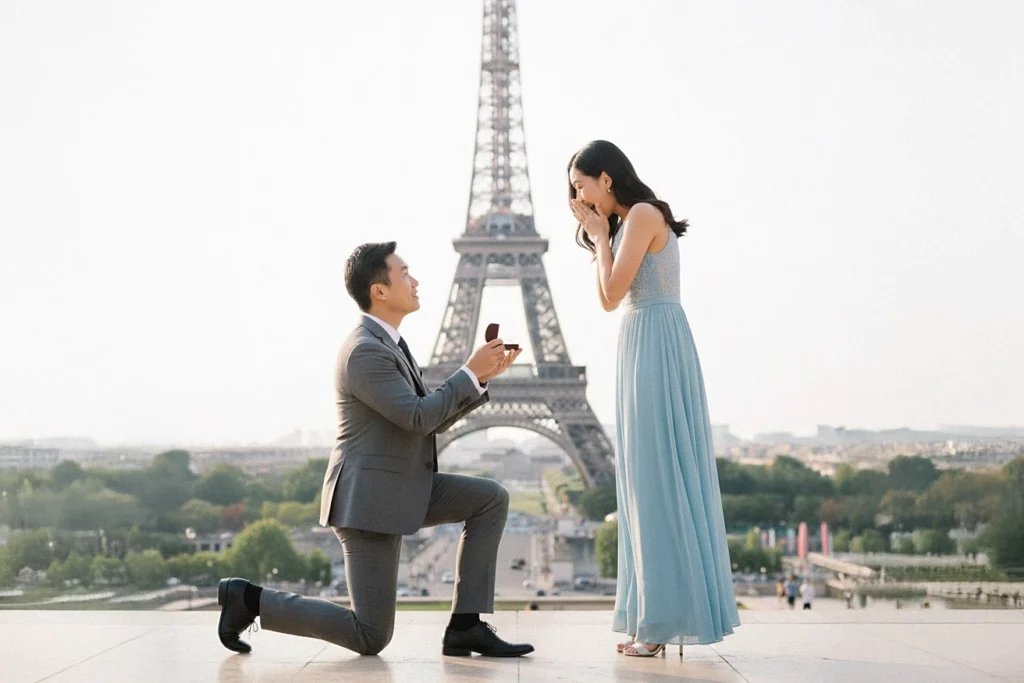
01 Eiffel Tower, Champ-de-Mars and Trocadéro
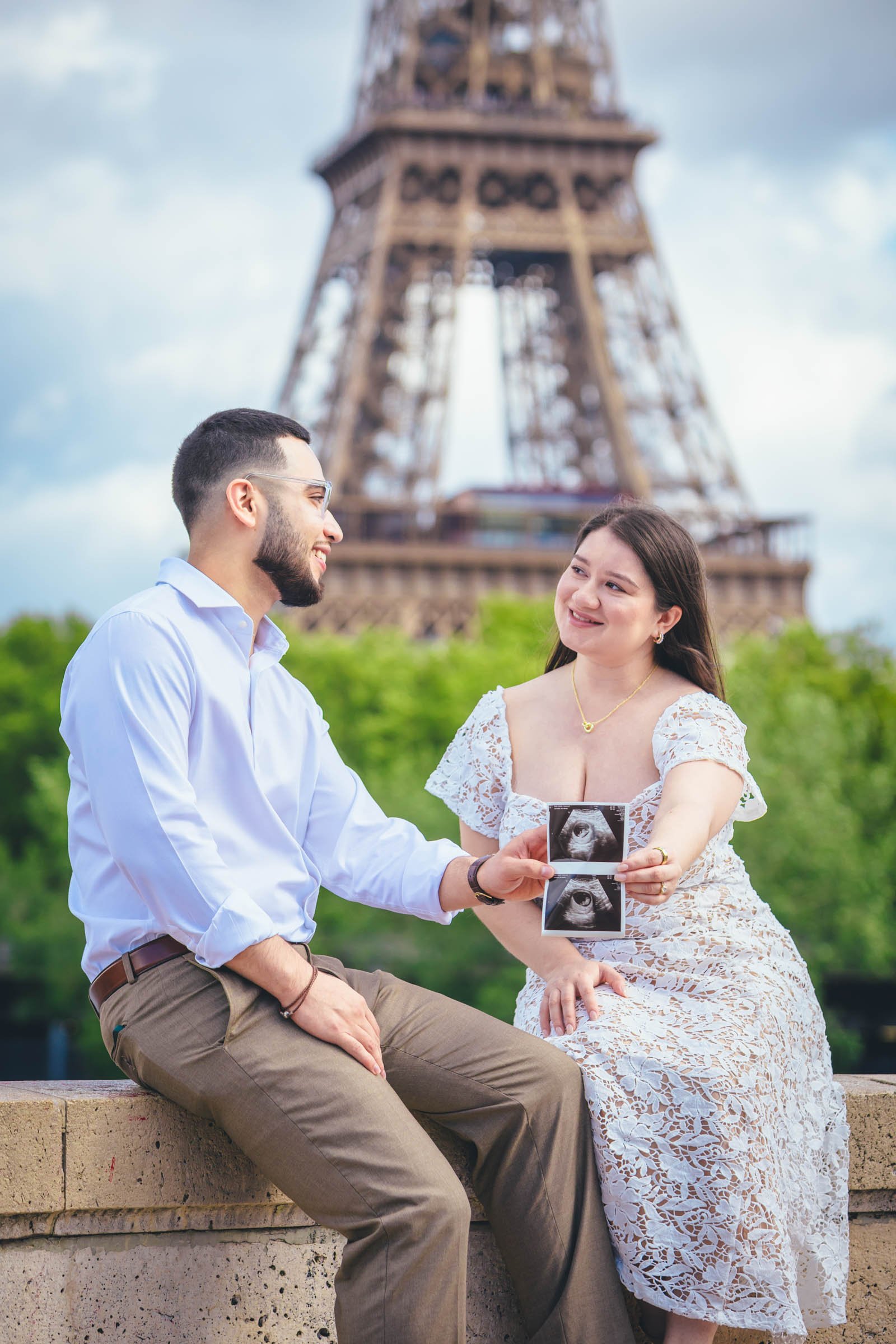
This is the natural starting point when you want the engagement photographs to say “Paris” at once. The open lawns and terraces support both wide compositions and closer portraits in which the tower becomes a graphic element rather than the entire subject. Sunrise is often the most practical choice for softer light and a better chance of workable sightlines, although no public viewpoint can be assumed to be empty.The area suits first-time visitors and couples with one landmark at the top of their list. It can also work when a proposal leads directly into an engagement session, provided the exact position and approach are agreed beforehand. Trocadéro is exposed and often busy, so privacy is limited; the gardens or a nearby secondary angle may feel more natural. Routes here should leave room for security procedures, crossings and changing pedestrian flow rather than relying on a minute-by-minute dash between viewpoints.
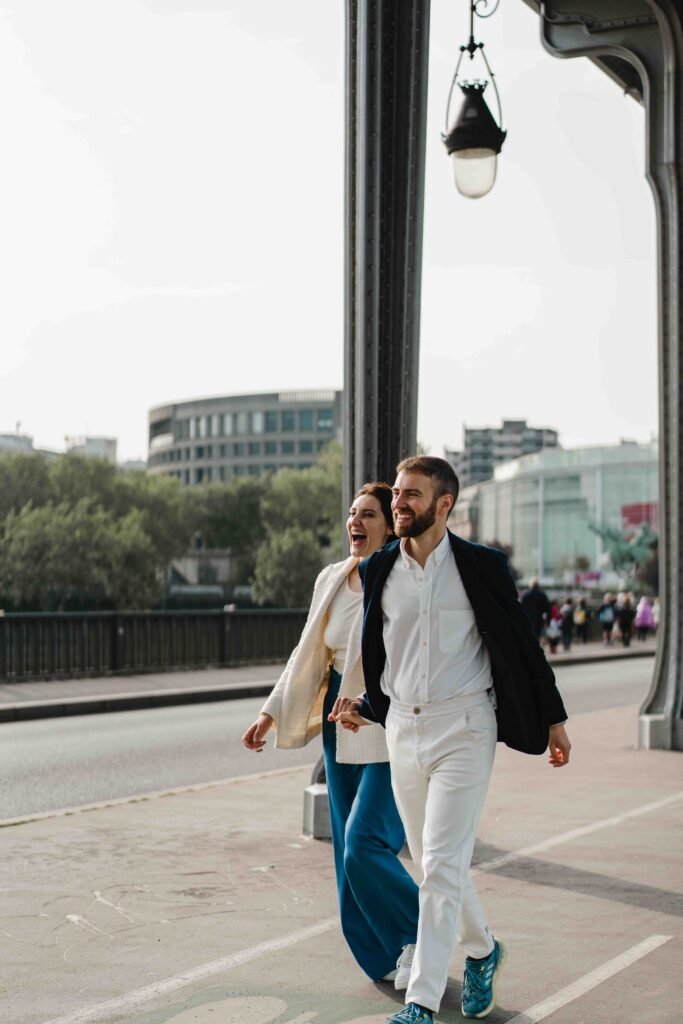
02 Bir-Hakeim Bridge
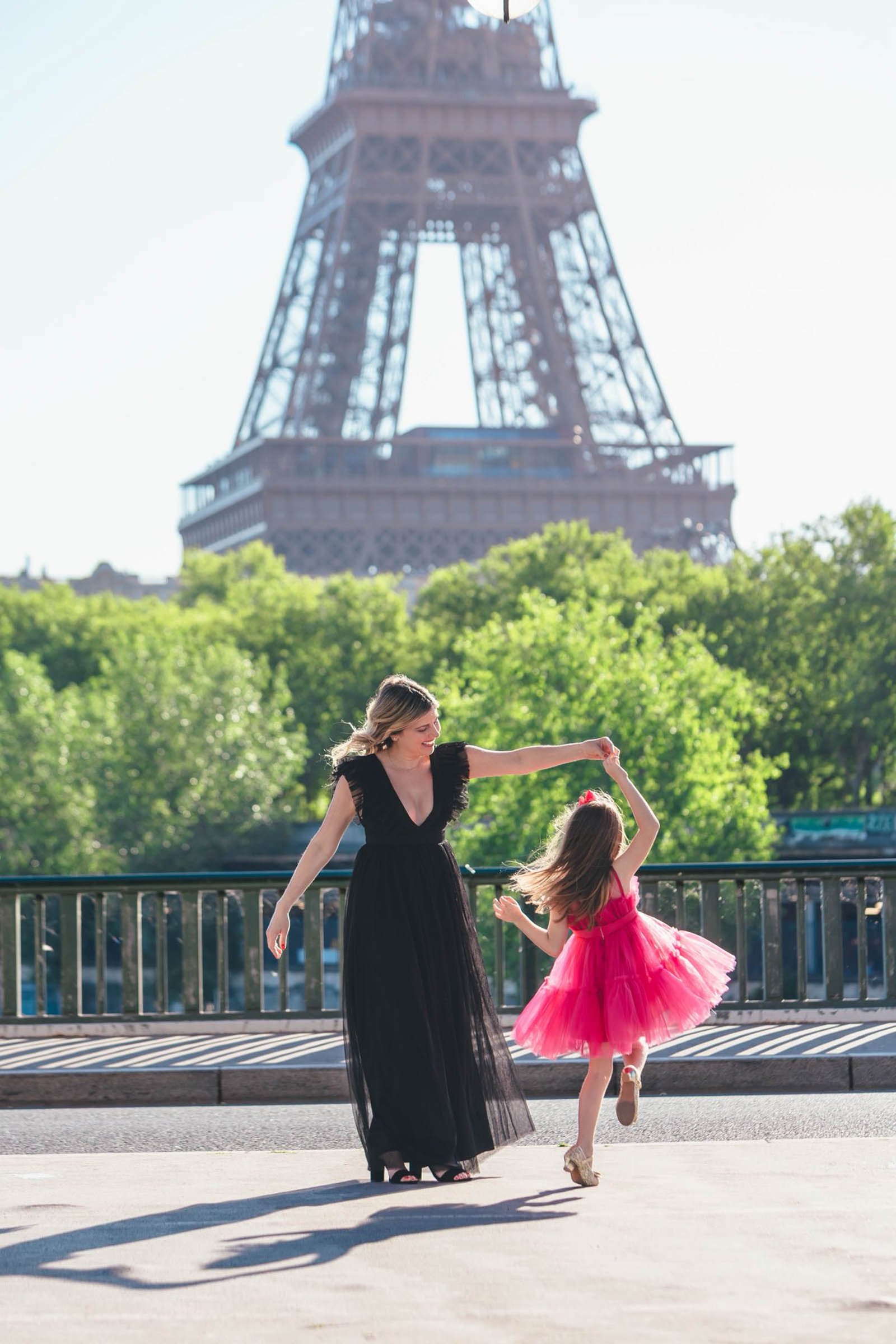
Bir-Hakeim offers a distinctly architectural interpretation of Paris. Repeating iron columns create strong depth, while openings along the bridge reveal the Eiffel Tower from selected angles. It is especially effective for couples who like structured, editorial images and want something sharper than a lawn or garden setting.The bridge works best as part of an Eiffel Tower-area route rather than as one isolated stop. Its covered section can add visual variety after open-air portraits, but it is a functioning passage with pedestrians, cyclists and other shoots competing for space. Staying aware of movement matters more than attempting elaborate poses. A photographer can use the lines quickly, then continue to a wider river or tower view nearby.
03 Pont Alexandre III and the Invalides Riverfront
For gilded details, ornate lamps and broad Parisian perspectives, Pont Alexandre III is difficult to match. It creates a formal, almost cinematic mood that suits tailored clothing, evening wear and engagement portraits with a polished finish. Views toward the Invalides and the Seine allow the gallery to feel recognizably Parisian without making the Eiffel Tower the central motif.This is an exposed urban setting, with nearby traffic and variable pedestrian activity. It is therefore better approached as an elegant meeting point and portrait zone than as a promise of seclusion. Moving between the bridge details and the riverfront gives useful variation without spending much of the session in transit.
04 Montmartre and Sacré-Cœur
Montmartre changes the rhythm of an engagement shoot. Instead of one dominant monument, its appeal comes from a sequence: cobbled lanes, pale façades, stairways, café corners and glimpses across the city. The white mass of Sacré-Cœur can provide scale, while quieter side streets give the portraits more intimacy and a stronger sense of place.Choose Montmartre when you want a walking story rather than a single hero view. The trade-off is physical: hills, steps and uneven surfaces can be tiring, particularly in formal shoes. The most comfortable plan uses a compact route and treats panoramic viewpoints as one part of the session, not a reason to climb repeatedly. Dense visitor traffic around Sacré-Cœur also makes nearby streets valuable.
05 Pont des Arts, the Seine and Louvre Exteriors
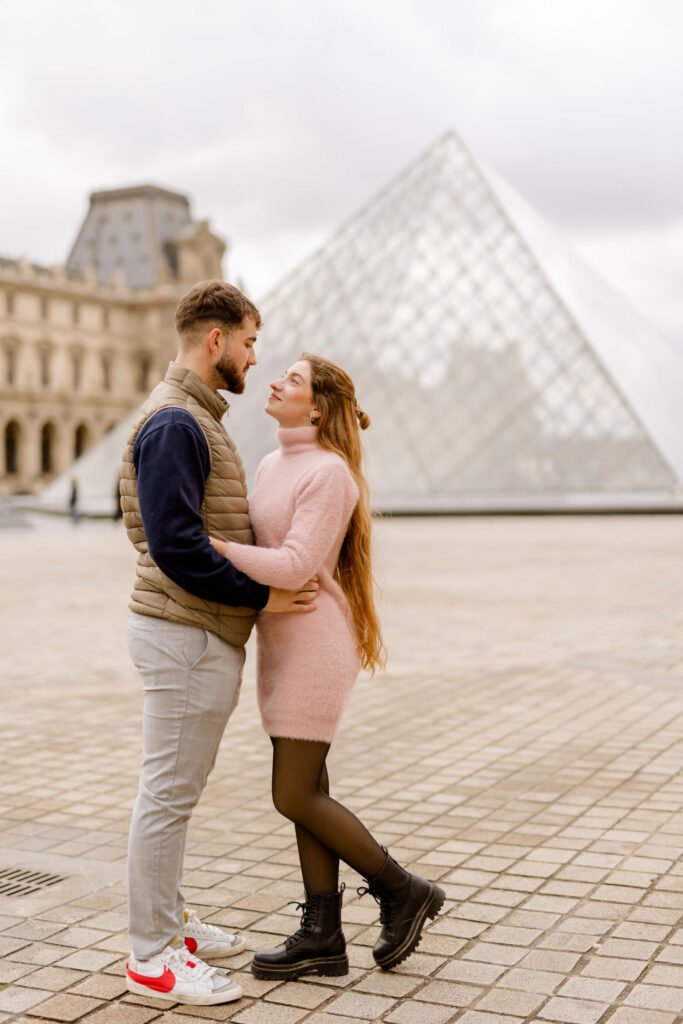
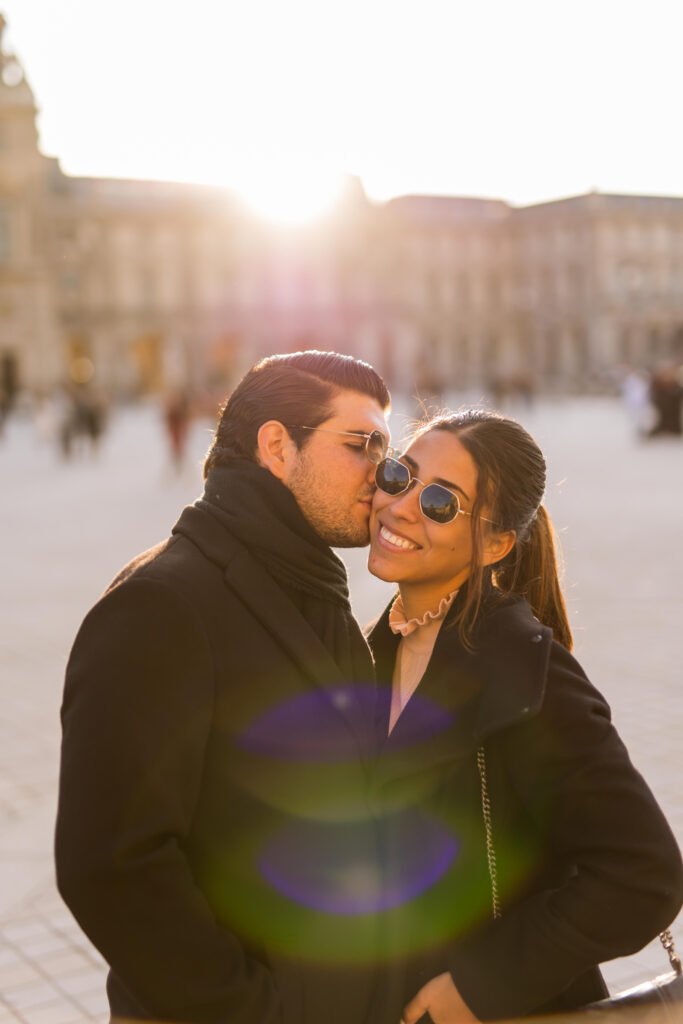
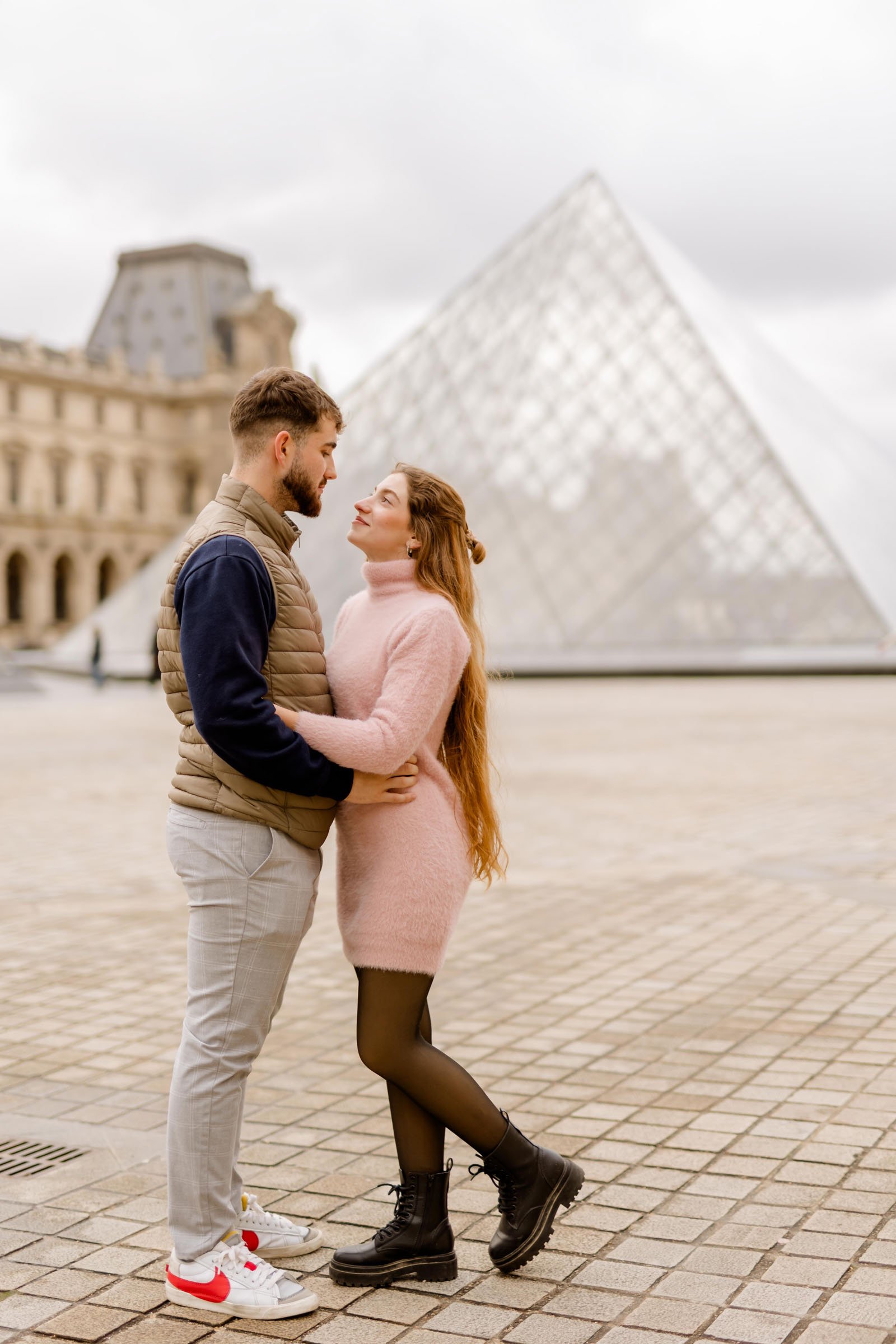
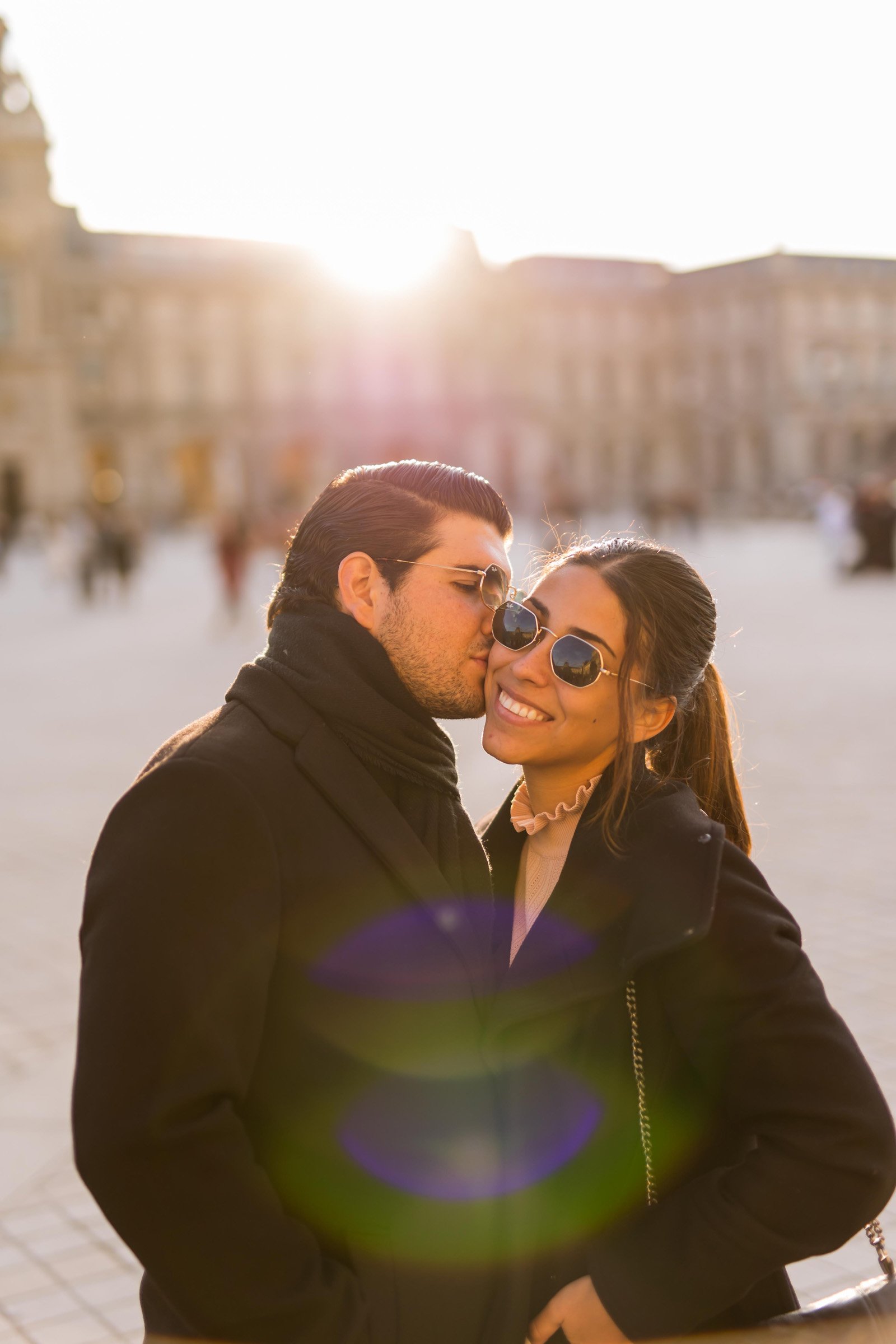
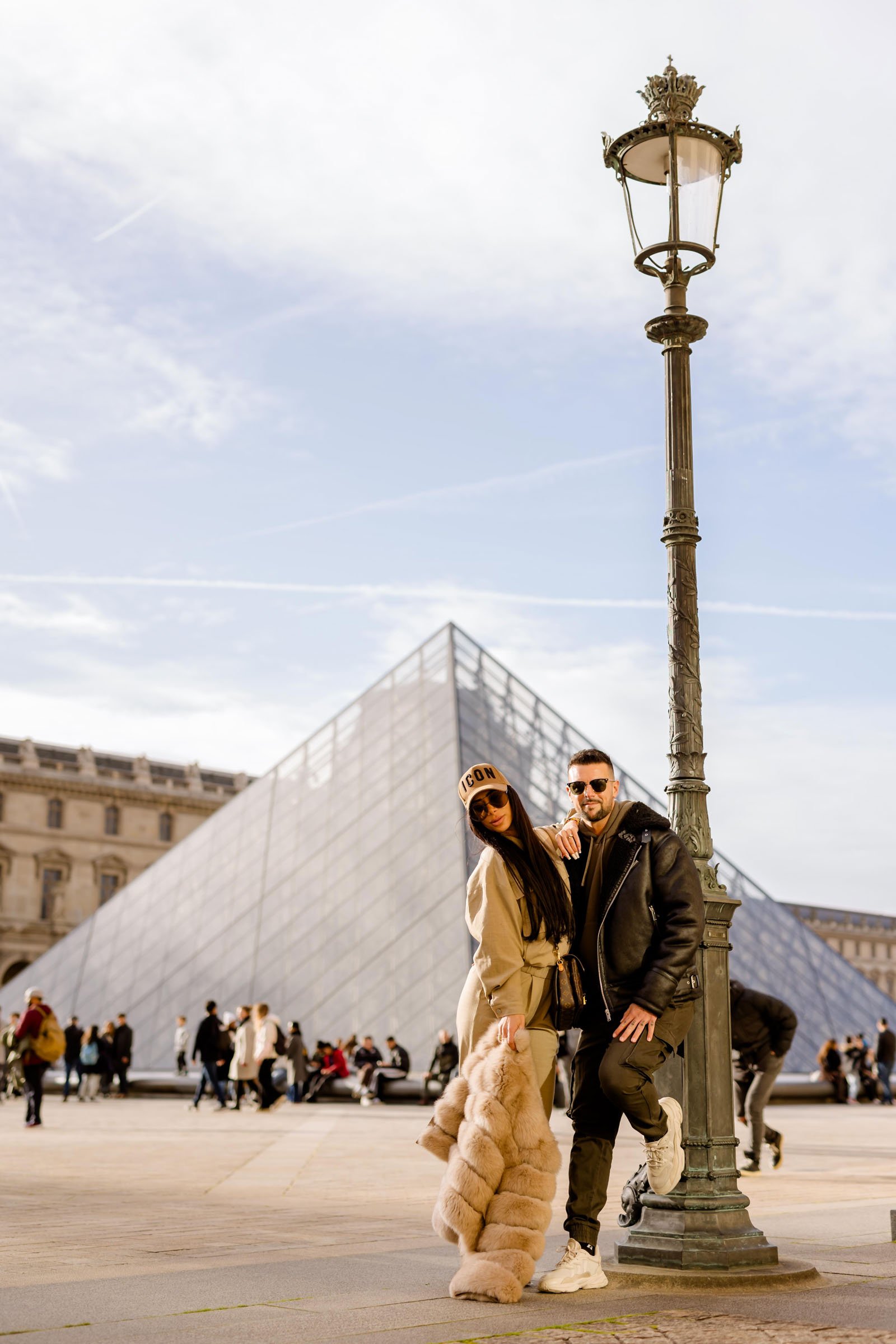
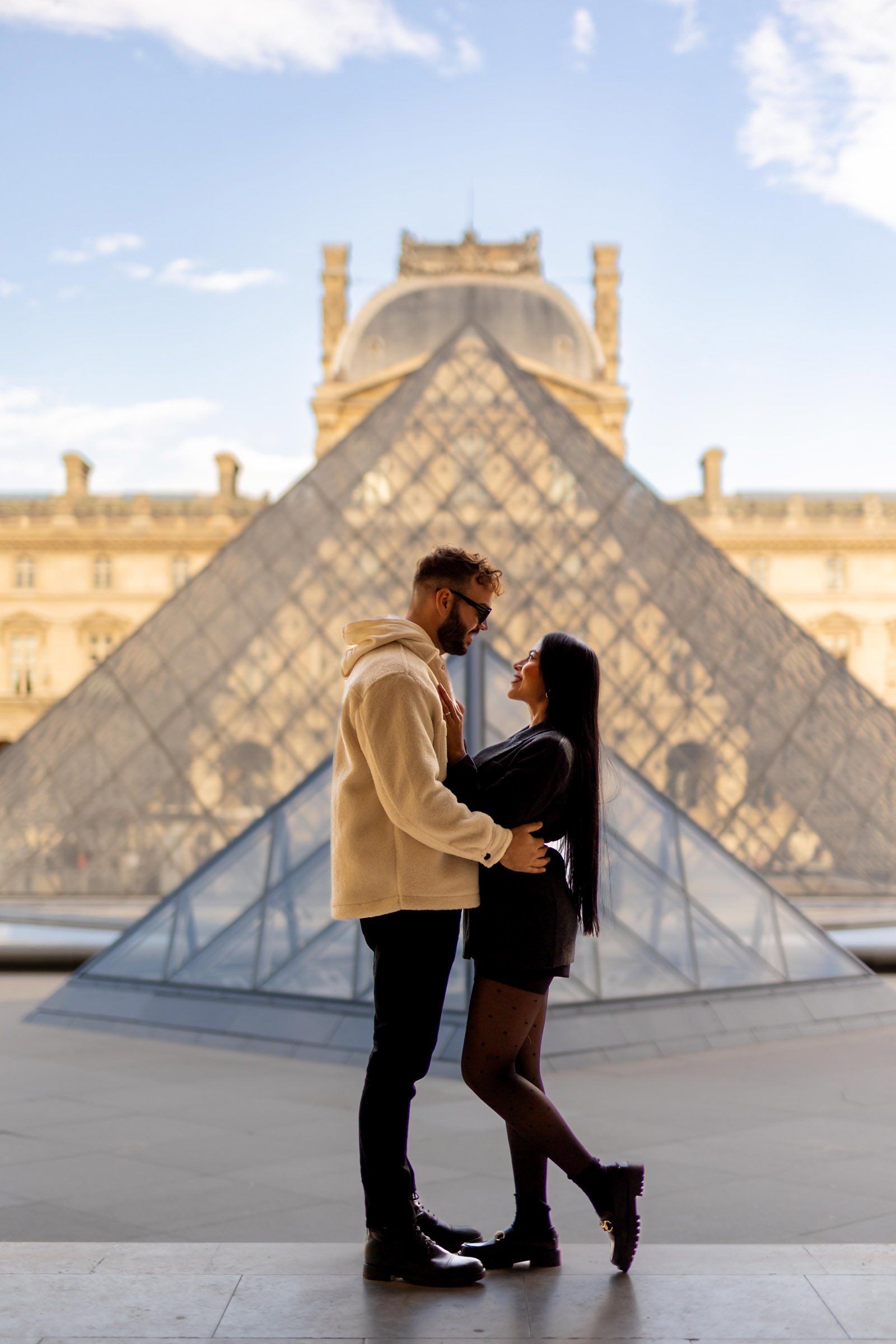
A central Seine route is efficient for couples with limited time in Paris. Pont des Arts provides open river views, while the surrounding walk can bring in stone quays, the Institut de France and exterior perspectives around the Louvre. The visual balance is classic but not dependent on a single landmark: water, bridges and monumental architecture share the frame.This area is particularly good for photographs in motion—walking across the bridge, turning along the embankment or pausing where the river opens behind you. The bridge itself offers little privacy, and crowd levels can change quickly. Rather than waiting too long for one perfectly clear view, it is often better to keep moving and use several compact compositions along the route.
06 Luxembourg Gardens
Luxembourg Gardens has a gentler visual register: formal paths, clipped greenery, seasonal planting and the Médicis Fountain create an editorial garden setting without depending on a skyline. It suits couples who want refined, romantic portraits and a calmer pace, especially when walking comfort matters more than fitting several monuments into one session.Because garden access and schedules can vary, the plan should be confirmed close to the shoot. A nearby street alternative is sensible if weather, an event or an access change affects the intended route. Within the garden, simple clothing and natural movement tend to complement the geometry better than highly complicated setups.
07 The Marais and Place des Vosges
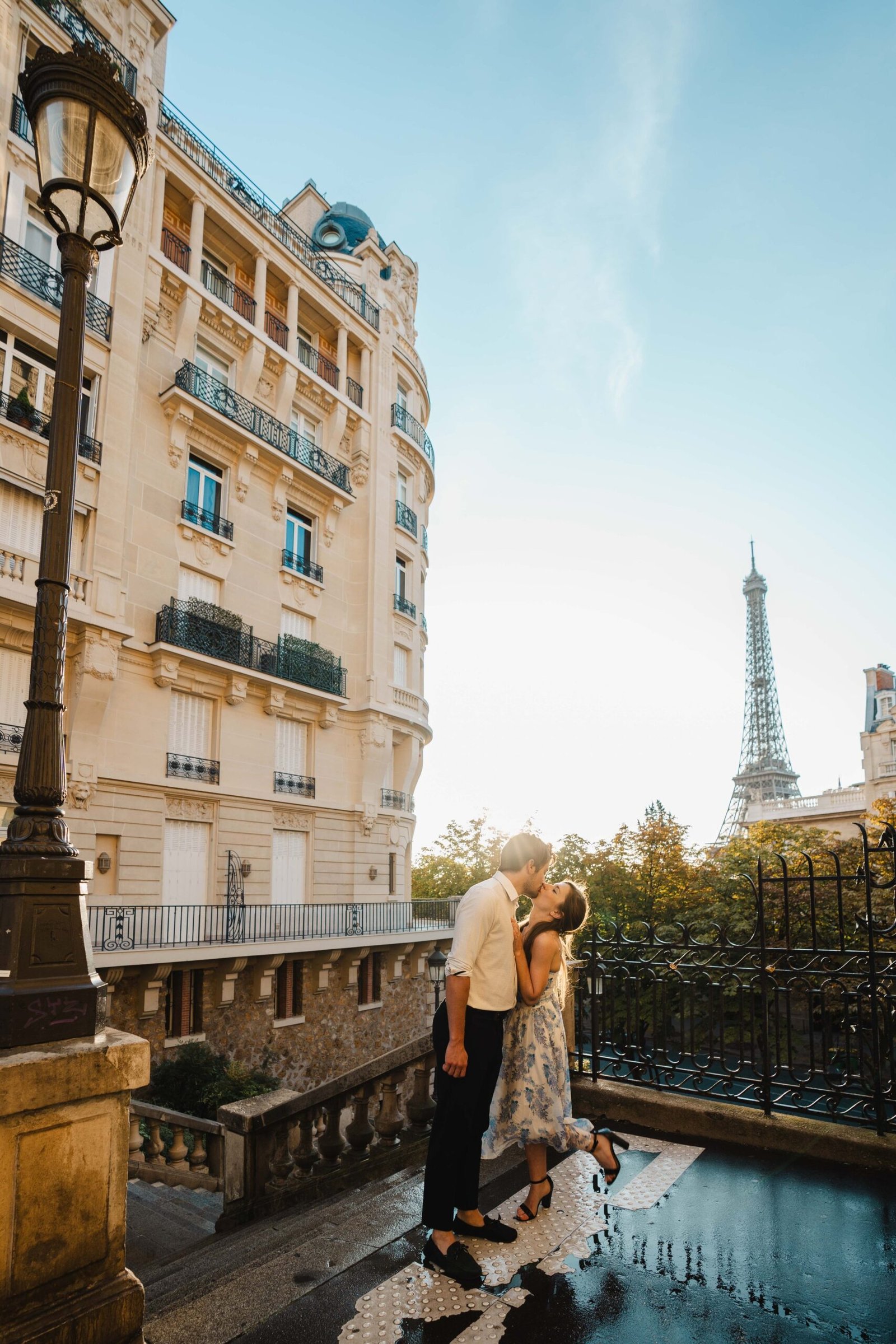
The Marais is for couples who want Paris to feel inhabited rather than monumental. Place des Vosges contributes brick, stone and long arcades; nearby lanes add old façades, shopfronts and tighter street scenes. The result can feel intimate and fashion-conscious, with architectural texture replacing the familiar postcard skyline.It is a strong choice for an “iconic plus local” session when paired with a central Seine stop, or a complete route in its own right for couples who have already visited the major landmarks. Narrow streets can become busy, so flexibility is useful. Arcades and compact corners also give the photographer options when open squares feel too exposed.
Engagement Photo Gallery
Explore more engagement photography in Paris.


Engagement Photographers in Paris
Browse photographers available in Paris for your engagement.

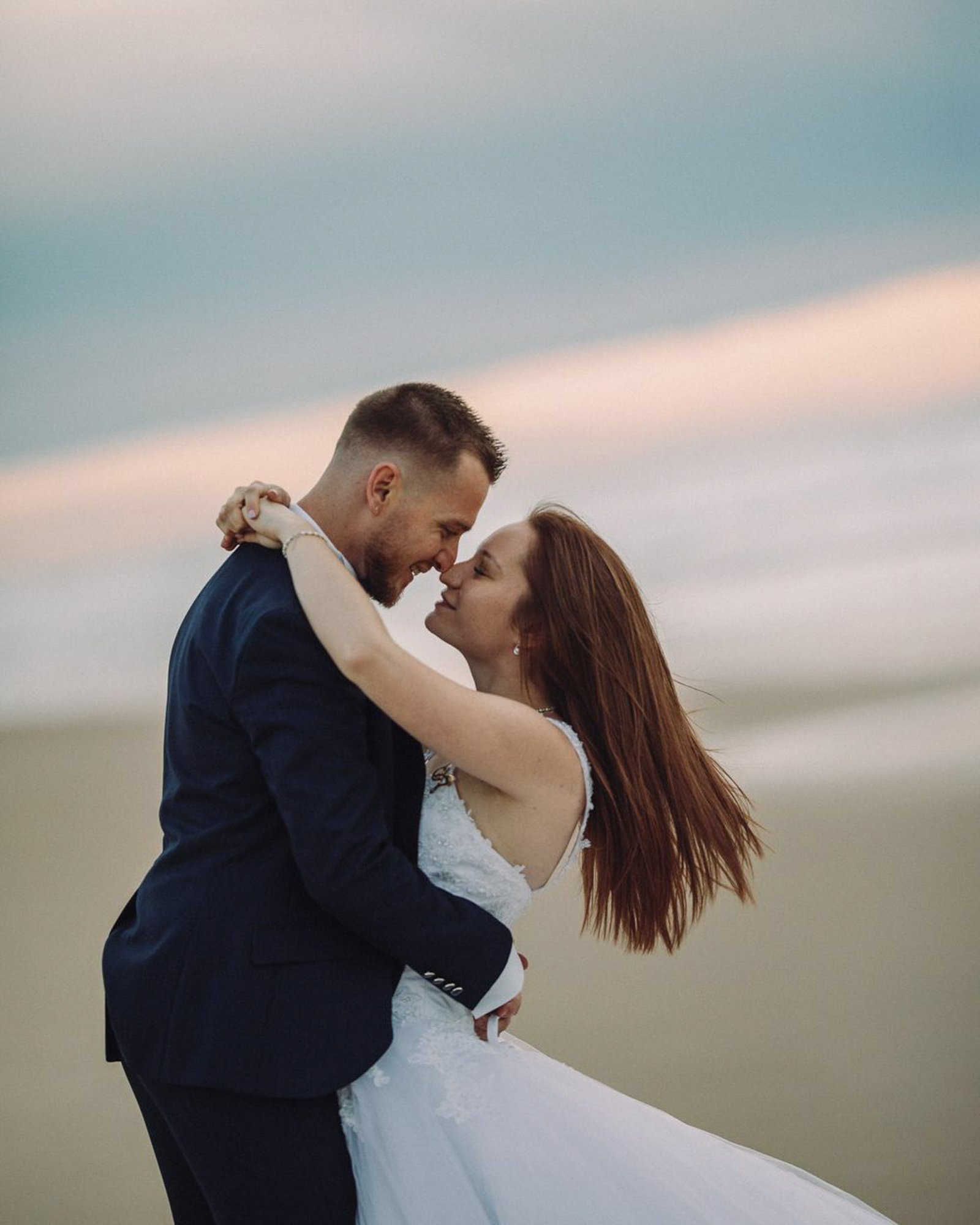


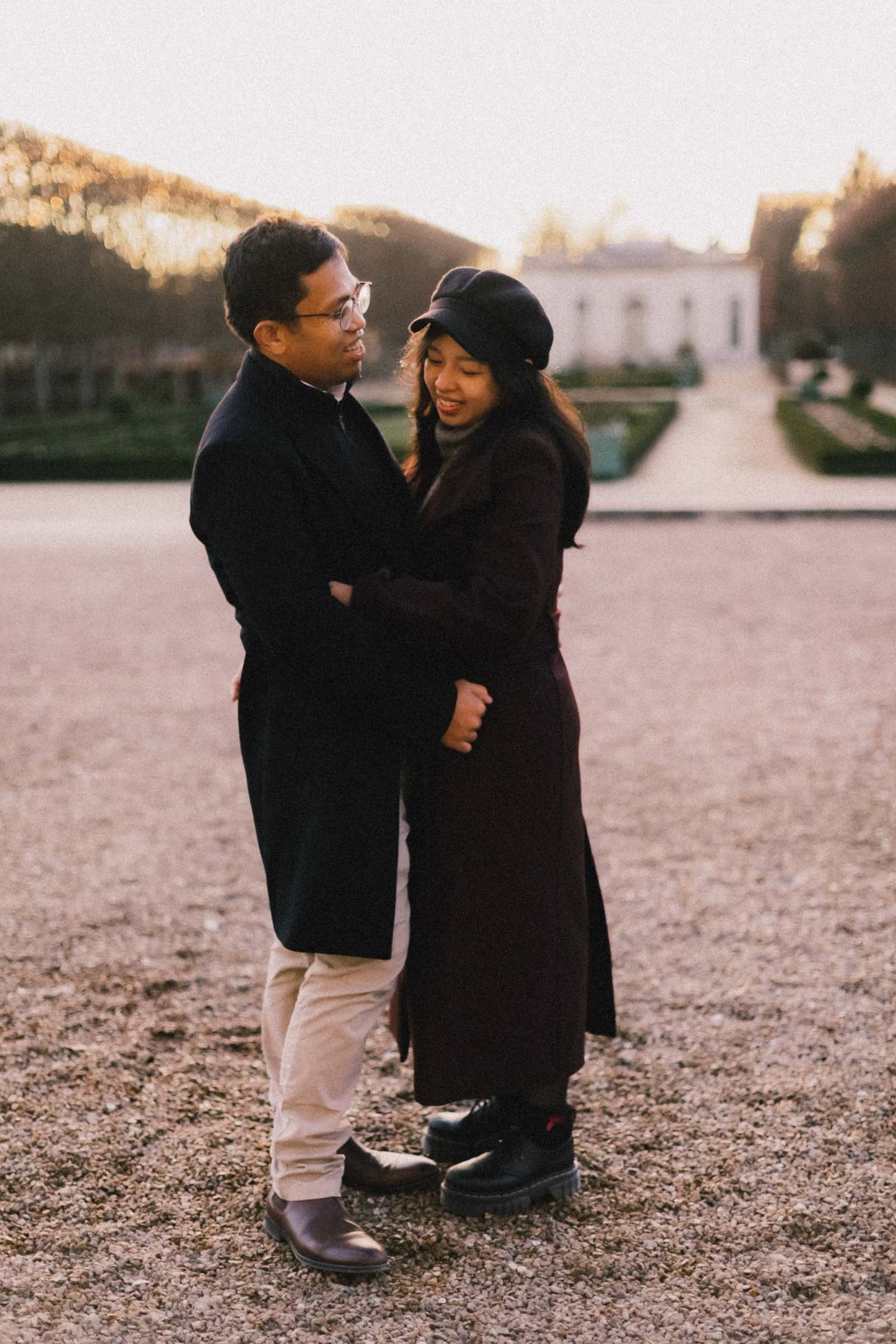
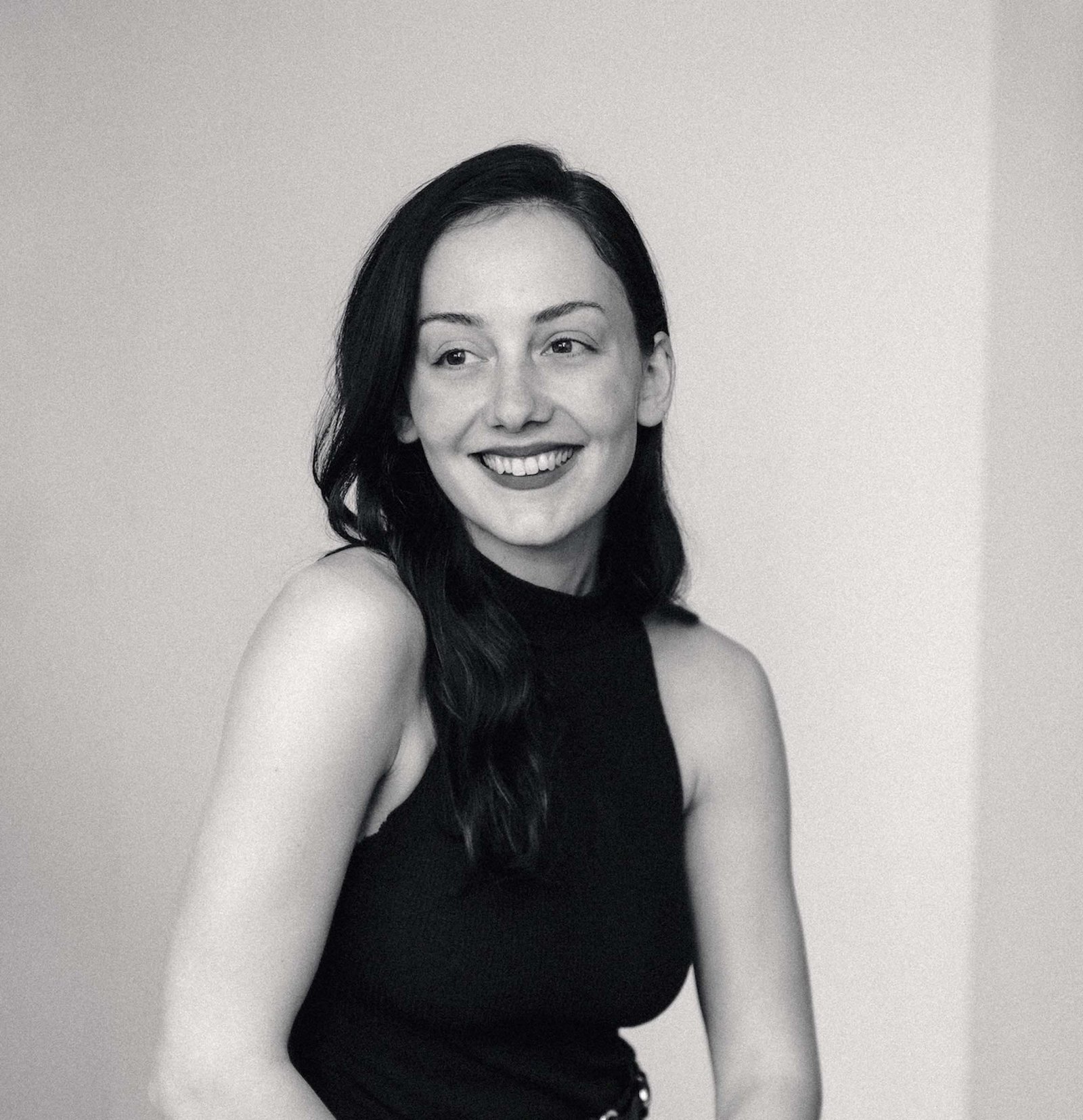
Marie
Marie is a Paris-based photographer with a passion for quiet, timeless images. Drawn to natural light, honest moments, and the kind of beauty that doesn't announce itself, she brings an analog sensibility to every session. With...
View Photographer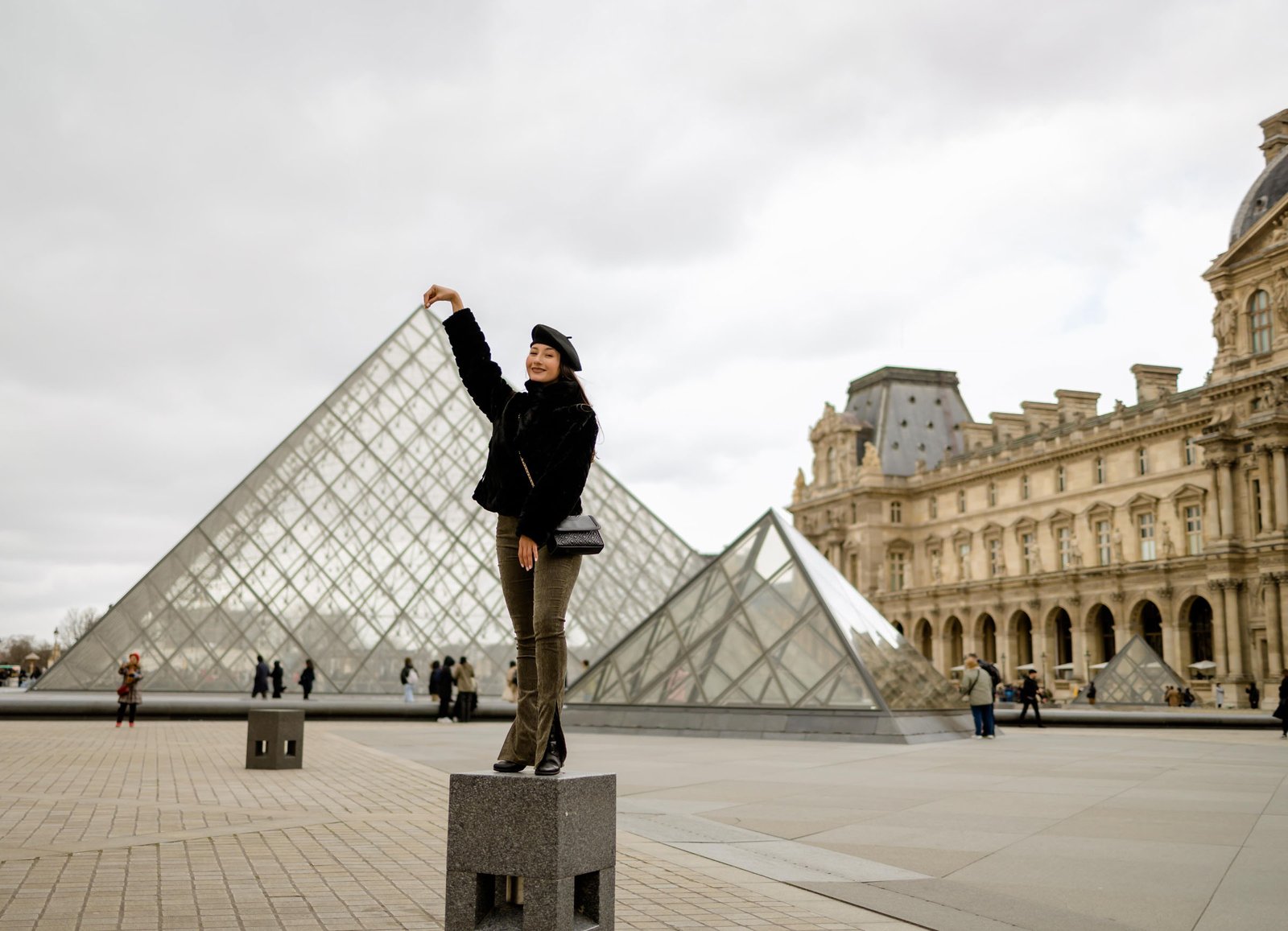
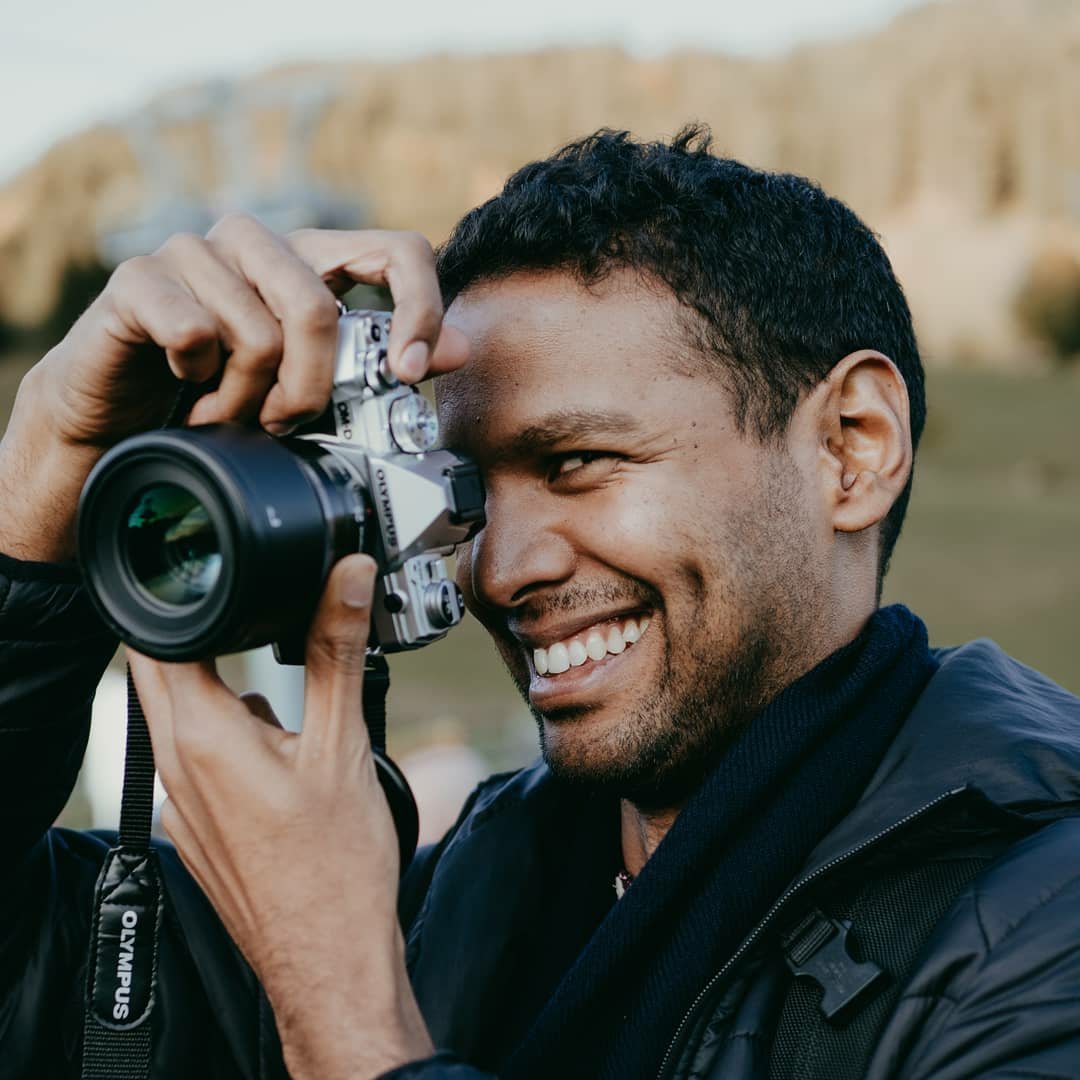
Abhishek
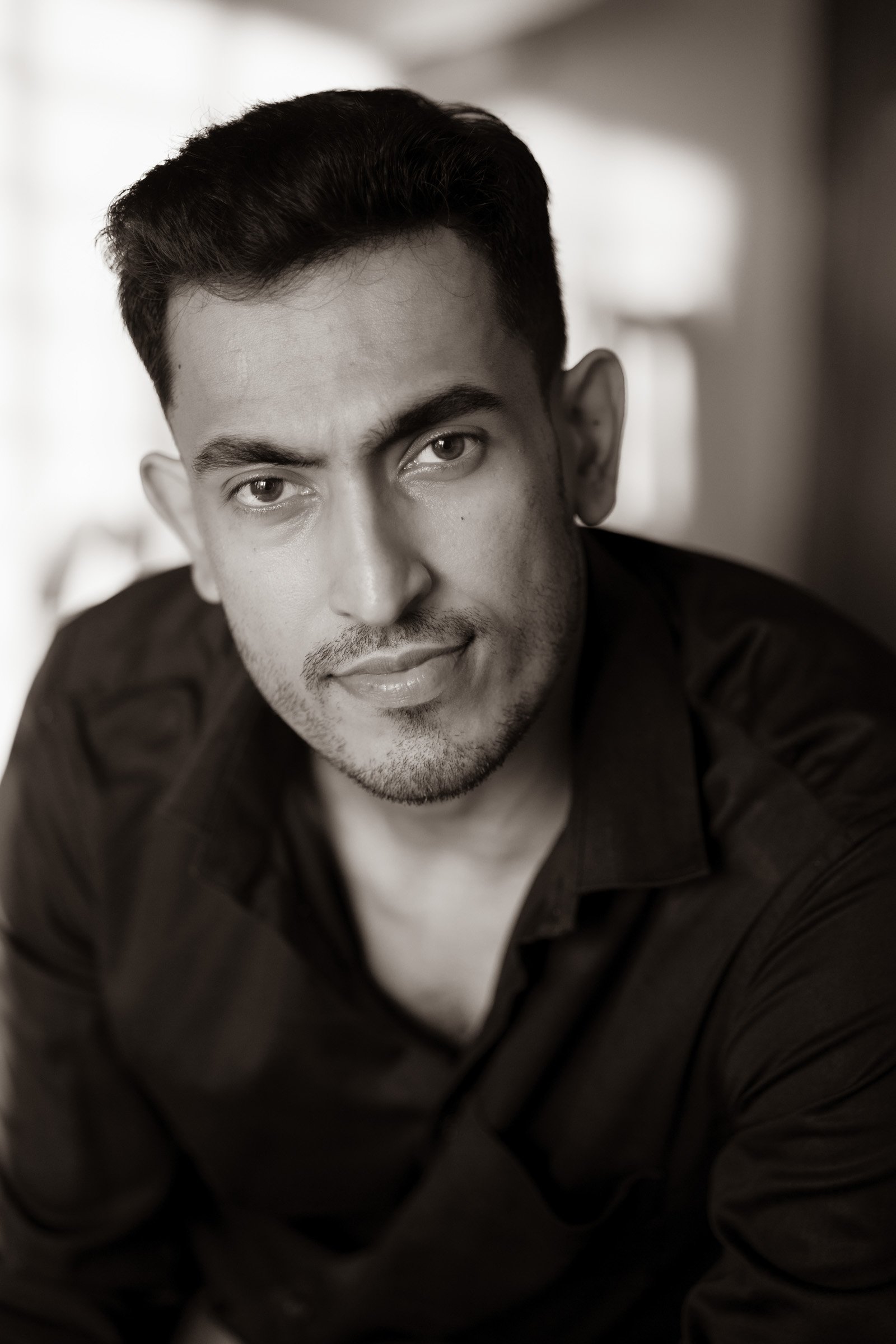
My name is Abhishek, a professional photographer with 10+ years of experience in lifestyle and couple photography. For the past 5 years, I have been working as a freelance photographer in Paris, capturing special moments for...
View Photographer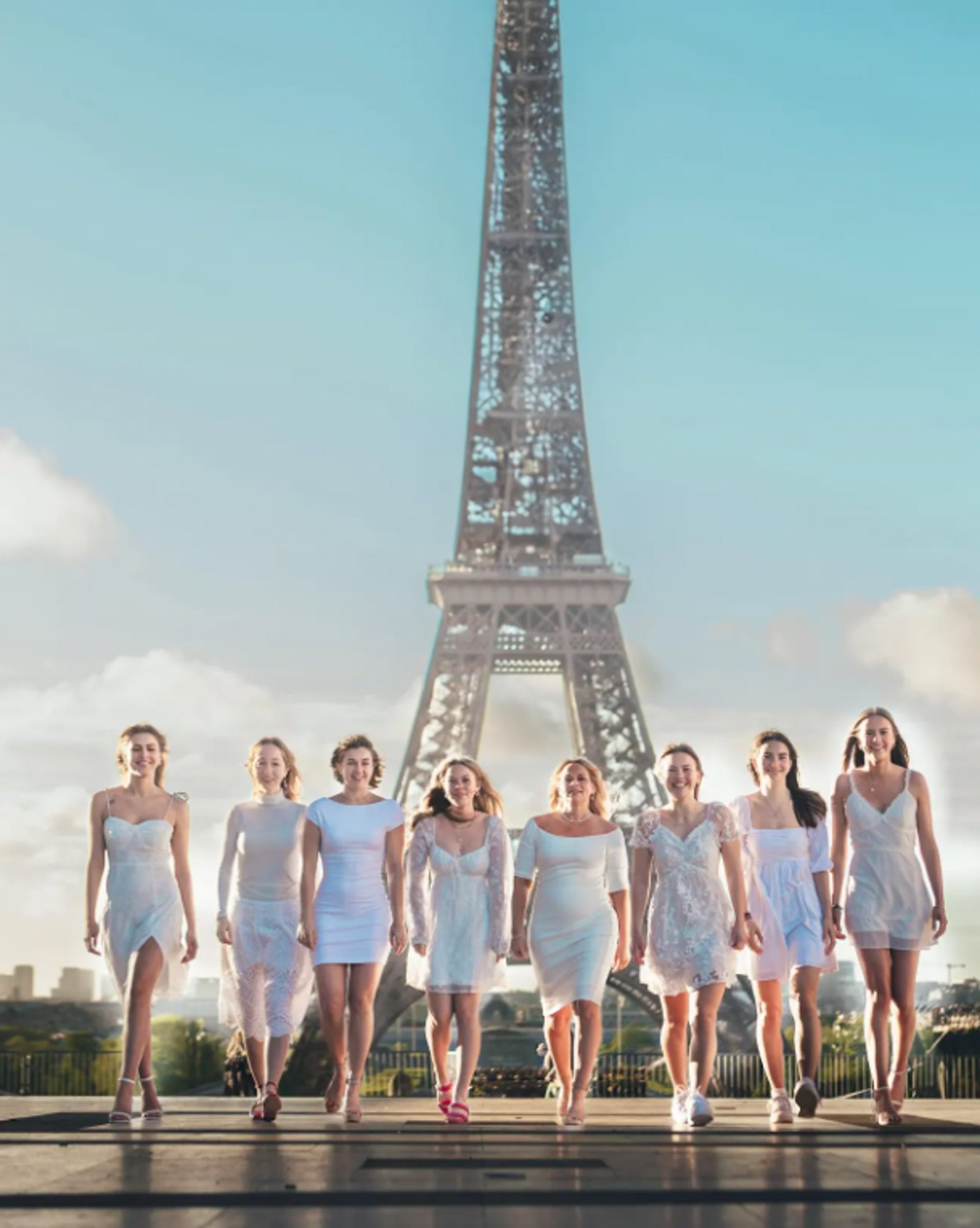
Rami
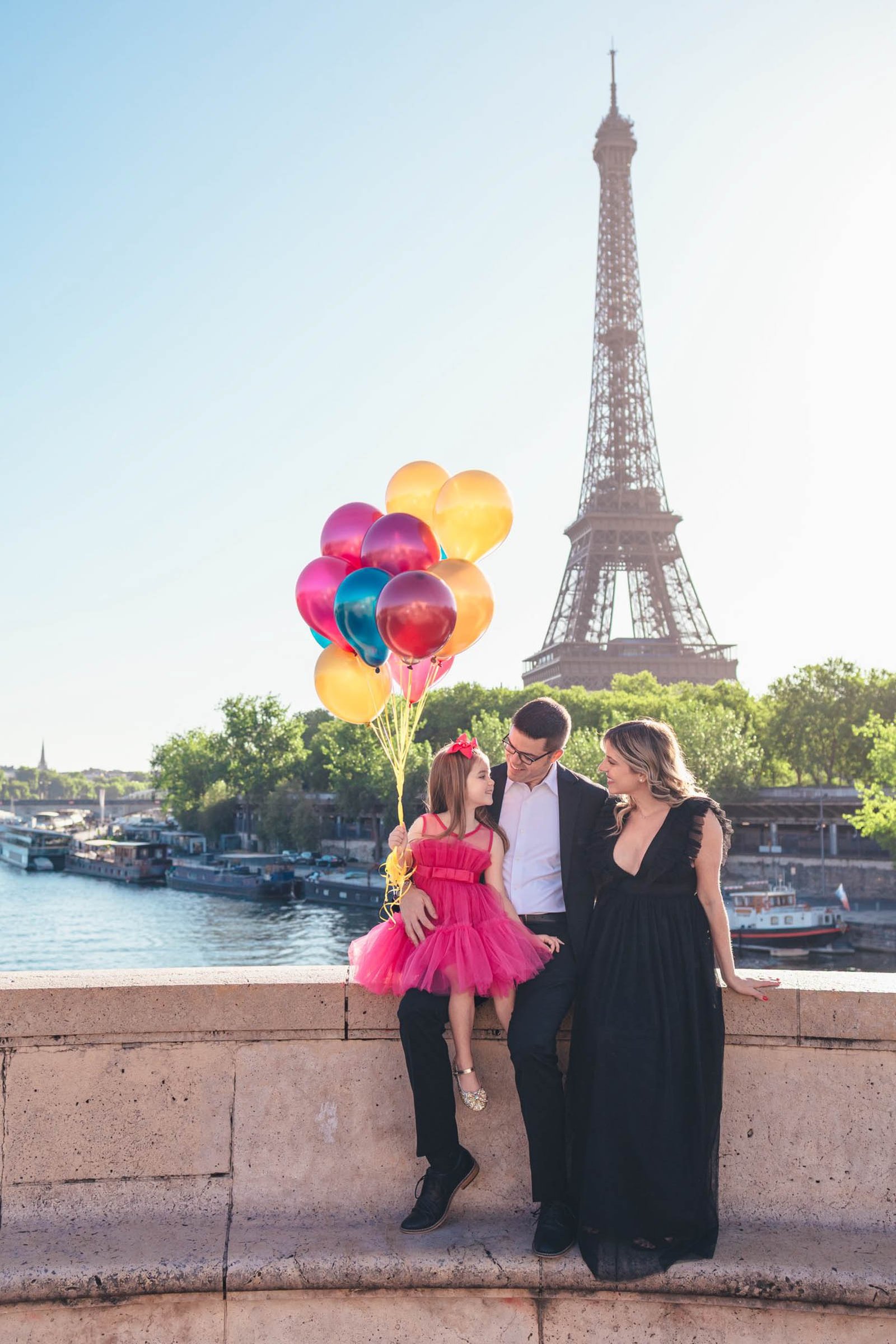
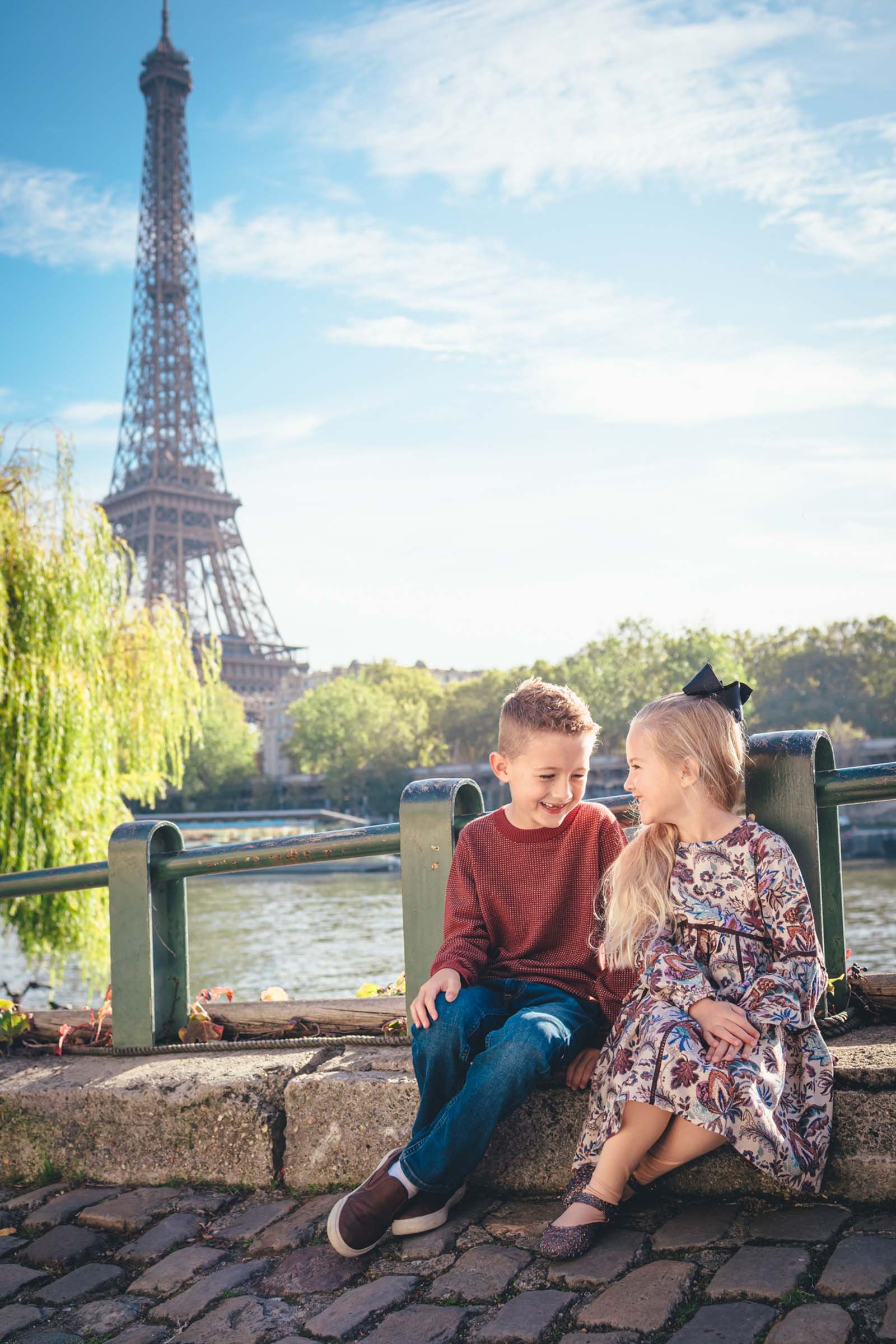
With 15 years of passion and experience in photography, I am a private family photographer based in Paris, dedicated to capturing the vibrant, colorful, and fresh moments (which is reflected in my photography style).
View Photographer


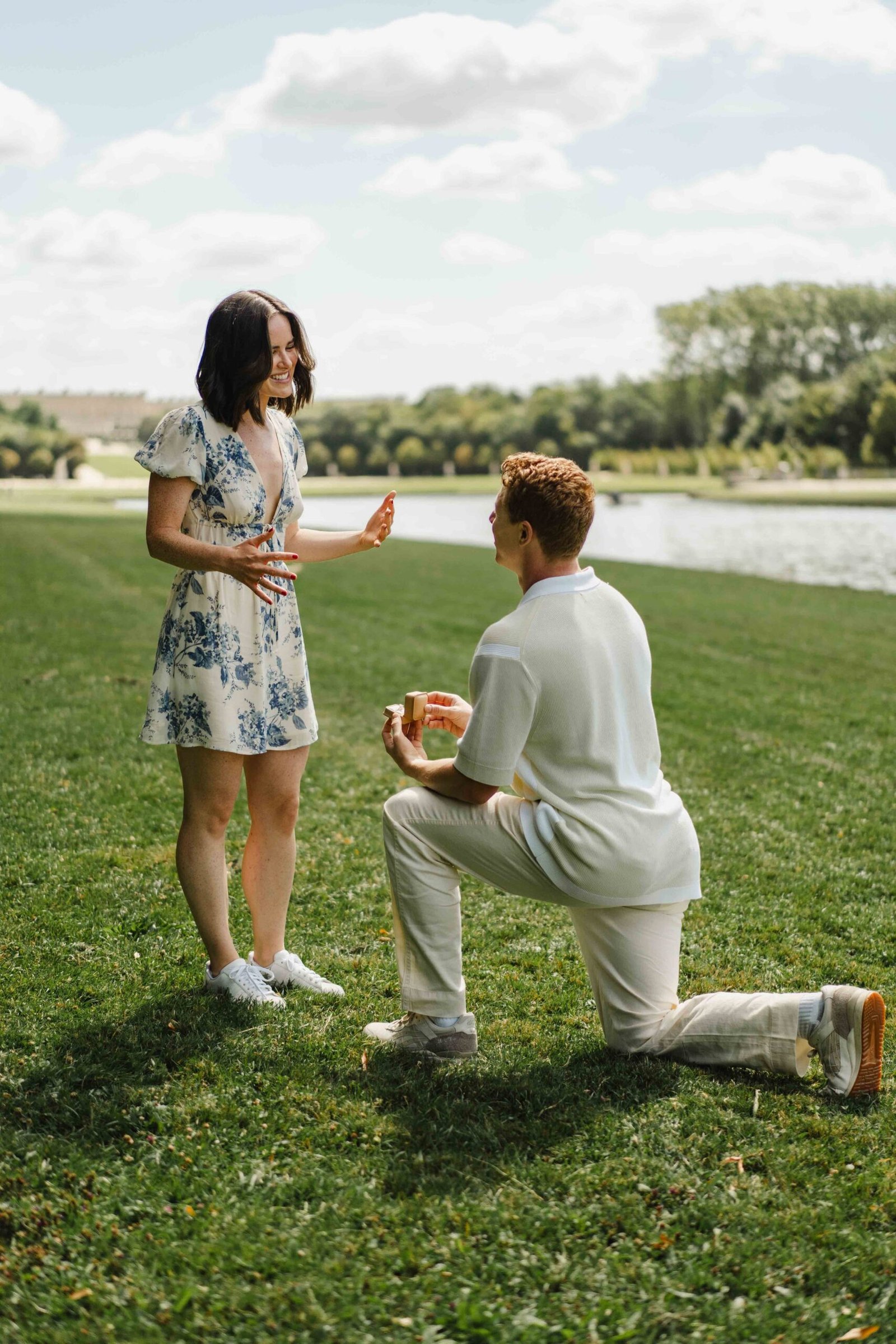
Valère
My name is Valère or Val, and I have been a photographer for more than ten years. I'm specialized in portrait, wedding, and corporate photography. As someone who has lived in Paris for nearly 15 years,...
View PhotographerPackages in Paris
Transparent pricing with edited photos included.
30 Minutes
30 Minutes- 20 professionally edited photos
- Private online gallery
- A local photographer
60 Minutes
1 Hour- 35 professionally edited photos
- Private online gallery
- A local photographer
- Multiple locations
90 Minutes
1 Hour 30 Min- 50 professionally edited photos
- Private online gallery
- A local photographer
- Outfit change
2 Hours
2 Hours- 70 professionally edited photos
- Private online gallery
- A local photographer
- Multiple locations
- 2 outfit changes
3 Hours
3 Hours- 100 professionally edited photos
- Private online gallery
- A local photographer
- Unlimited locations
4 Hours
4 Hours- 130 professionally edited photos
- Private online gallery
- A local photographer
- Sneak peek same day
6 Hours
6 Hours- 200 professionally edited photos
- Private online gallery
- A local photographer
- Priority editing
Elopement
8 Hours- 250 professionally edited photos
- Private online gallery
- A local photographer
- 8 hours
- Getting ready
- Ceremony
- Portraits
Why Book This Engagement in Paris
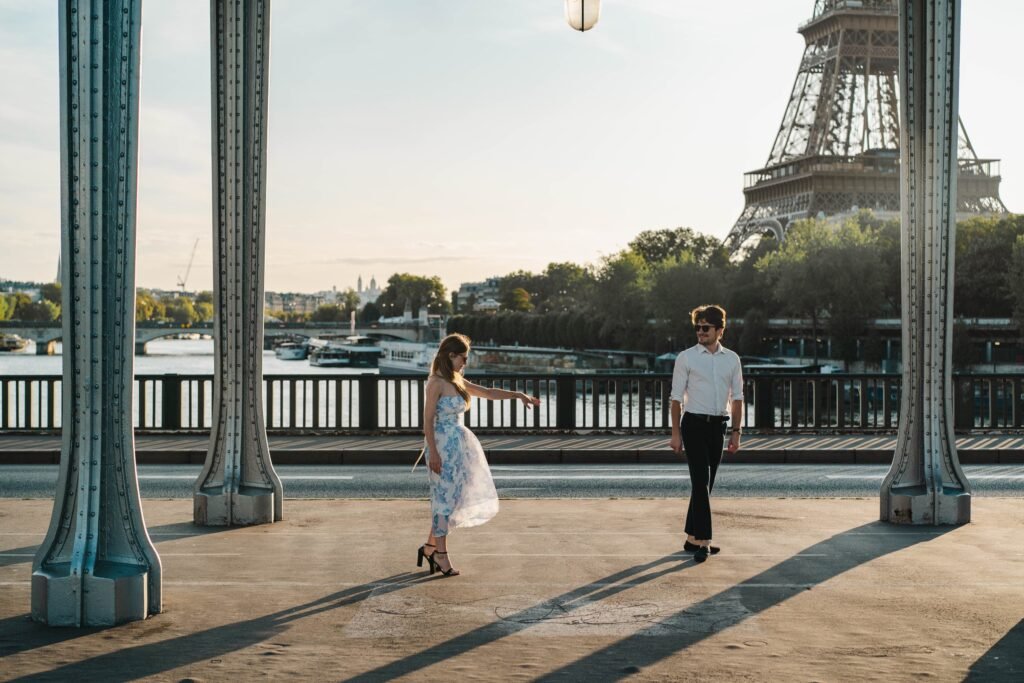
Paris offers more than one kind of romanceThe city can look monumental, intimate or fashion-led depending on the route. The Eiffel Tower gives an engagement gallery immediate geographic identity. Montmartre brings cobbles, steps and neighborhood movement. The Seine and Pont Alexandre III feel grander and more cinematic, while the Marais replaces sweeping landmarks with brick façades, arcades and narrow streets. That range makes it possible to choose a visual language that fits you rather than treating every Paris engagement session alike.Paris also rewards movement. A short walk can shift the composition from a broad riverside view to stone embankments, bridges and architectural details. This is particularly valuable for engagement portraits: the session feels less like a sequence of static poses, and the resulting images can move between celebratory, editorial and quietly affectionate without requiring distant transfers.Iconic views require realistic expectationsFamous Paris landmarks are public spaces, not private sets. Trocadéro, Champ-de-Mars and the central bridges can remain active even early in the day. A skilled approach is not to promise an empty city, but to use angles, patient timing and nearby secondary viewpoints well. Sunrise often improves the odds of lighter footfall and offers soft illumination; evening brings atmosphere but usually makes landmark sessions less predictable.The best photographer for your engagement is also a matter of style and planning fit. On TravelPhotoMatch, you can browse photographer profiles and choose someone whose displayed work, portrait direction and visual treatment suit the images you want. Look beyond landmark familiarity: consider whether you prefer candid movement, polished editorial posing, bright color or moodier contrast.
Tips for Your Session
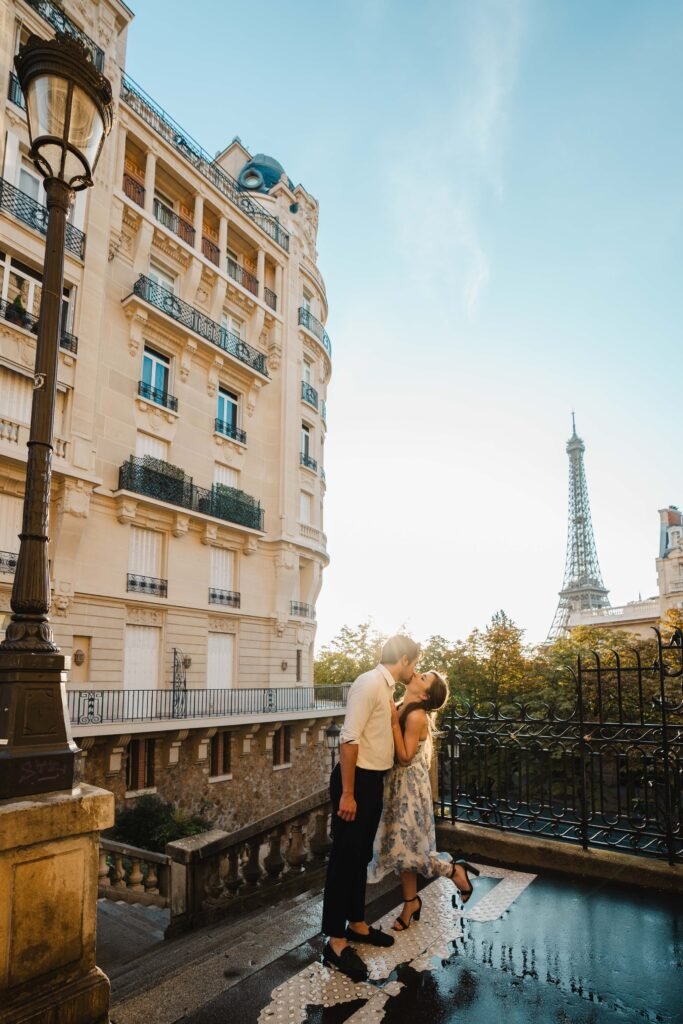
Build the session around one Paris storyChoose one primary area, then add nearby portrait settings rather than collecting distant landmarks. An Eiffel Tower route can naturally incorporate Bir-Hakeim; Pont des Arts can lead into Seine and Louvre exterior scenes; Montmartre is best treated as its own neighborhood walk. Crossing the city to include all three would spend valuable session time on transport and reduce the relaxed quality engagement portraits need.For the quietest practical conditions at famous viewpoints, consider an early start. Sunset can produce warmer tones, but it also attracts more visitors and offers less room to recover from delays. Garden hours, works and event-related access can change, so reconfirm the intended route near the session date. If your setup could be considered professional or commercial production at a monument, ask your photographer to verify any location-specific permission requirements rather than assuming that one rule applies throughout Paris.Dress for both the frame and the routeSolid colors, restrained patterns and coordinated tones generally sit well against Parisian stone, ironwork and greenery. Coordination does not require identical outfits: shared warmth, formality or color intensity is usually enough. A second look can add variety, but only when there is a practical place and sufficient session time to change.Footwear deserves equal attention. Montmartre's cobbles and steps, long bridge approaches and riverside walks can be uncomfortable in formal shoes. Bring an easy walking pair if necessary and change shortly before portraits. In cooler or wet weather, use outerwear that you are happy to have photographed; carrying bulky coats through every frame is rarely comfortable.If a proposal is part of the plan, keep the ring secure and easy to reach, silence unnecessary phone notifications and avoid repeatedly checking for the photographer as you approach. Share a recent photograph and an accurate clothing description beforehand. If relatives will appear afterward, give them a separate waiting point so they do not accidentally reveal the surprise or crowd the key frame.
What to Expect

Before the sessionPlanning begins with the kind of Paris you want in the photographs. You might prefer the unmistakable Eiffel Tower, the elegance of the Seine bridges or the lived-in character of Montmartre and the Marais. Your photographer can then shape a realistic route around your chosen mood, session length, likely foot traffic and walking comfort. Mention any priority image—such as a wide architectural portrait or a quiet close-up—before the day.If the engagement is already official, the experience can remain relaxed from the first frame. If you plan to propose immediately before the portraits, more precise coordination is needed: a recognizable outfit, an exact standing point, a planned arrival direction and a discreet way to confirm that you are in position. The photographer may also suggest an alternate nearby point in case the original view becomes obstructed.During and after the key momentA typical engagement shoot blends gentle direction with natural interaction. Rather than holding one pose repeatedly, you may walk beside the Seine, pause beneath an arcade, cross a bridge or turn toward the skyline. This produces a mix of wider Paris scenes, closer portraits and candid reactions. Clear guidance is especially useful at exposed landmarks, where small adjustments in position can keep distracting signs, traffic or passersby from dominating the frame.When a proposal opens the session, allow a few minutes afterward simply to react. There is no need to move immediately into formal posing. Once you are ready, the photographer can guide you through the nearby portrait route, using that genuine excitement as the emotional thread of the shoot.
Frequently Asked Questions
Helpful answers about your engagement in Paris.
Ready to plan your engagement in Paris?
Connect with local photographers and find the right fit for your style, timing, and destination.
Browse Paris Engagement Photographers